The Best Anime of 2025
 |
|
Honorable Mentions
Zenshu brought humor and depth to the played-out isekai genre by focusing on a burned-out director showing up in the world of her favorite anime.
Rock Is a Lady's Modesty was a loud, sweaty twist on yuri genre conventions and a testament to music's rebellious power.
Sorairo Utility used its slice-of-life golf story as a playground for expressive animation, with inconsistent but charming results.
Anne Shirley was a lovely little adaptation of the Green Gables story that unfortunately compressed its narrative so much it made me seek out the original.
Dealing with the Mikadono Sisters Is a Breeze was one of the most watchable and character-rich harem comedies of recent seasons, despite its genre baggage.
Gachiakuta was a class-conscious dark fantasy with unique worldbuilding and grungy character designs that put it a cut above the norm.
Cleavatess was a more typical swords-and-dragons fantasy that nevertheless hit on some potent themes about humanity's dark nature—at least when it wasn't torturing its characters for torture's sake.
Secrets of the Silent Witch was a cozy comedy from the director of KonoSuba and Princess Connect with a surprisingly good portrayal of neurodivergence.
The 100 Girlfriends Who Really, Really, Really, Really, Really Love You got a little too weirdly horny for me in its second season, but my god was the translation funny.
And lastly, Naoko Yamada's The Colors Within and Tatsuya Yoshihara's Chainsaw Man – The Movie: Reze Arc were proof that some of anime's best filmmakers are still flourishing, featuring show-stopping animation in two remarkably different packages.
Top Anime of 2025
15. Ruri Rocks

Ruri Rocks follows an endearingly bratty high schooler's evolving fascination with geology after she pressures a knowledgeable grad student into helping her find gemstones. More than any other show on this list, what you see here is what you get: this is simple slice of life featuring enough mineralogy factoids to fill a small textbook. What makes it special is its absolutely phenomenal visual design—director Shingo Fujii and his team fill this passion project with gorgeously lit Japanese forests, creative shot compositions, and animation that puts great care into expressions and body language. Even though the narrative is little more than a breezy time, it's all about how you package it—who knew one of the best looking shows of the year would be about rocks?
14. Kowloon Generic Romance
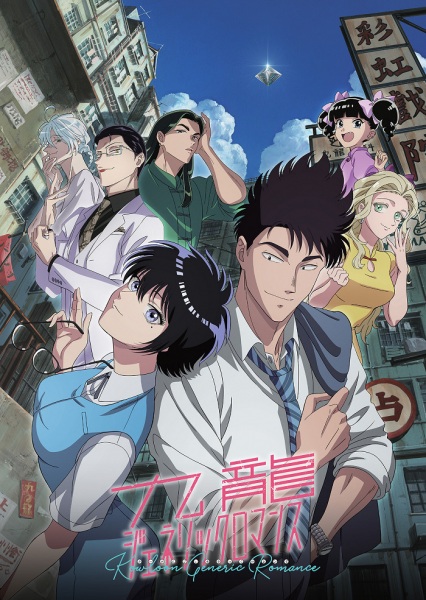
Despite its modern production, sci-fi show Kowloon Generic Romance feels like a throwback to 1990s cel animation, full of grimy painted backgrounds, hazy color palates, and angular character designs that call to mind the likes of Great Teacher Onizuka. Its setting is also a throwback—the real-life Kowloon Walled City was demolished in the early 90s, making it a perfect backdrop for a twisting potboiler about doppelgangers, artifice, and nostalgia. Although original mangaka Jun Mayuzuki is no stranger to great romances (her other major work, After the Rain, was my favorite show of 2018), Kowloon's romance sometimes feels secondary to its mercurial main story and ruminations on memory and selfhood. To that end, the show sometimes gets in its own way, eschewing straightforward explanations in favor of an enigmatic narrative that can be difficult to follow. But if a heady piece of retro sci-fi sounds up your alley, there was little better in 2025 than Kowloon.
13. Turkey! Time to Strike

Judging by its name and promotional materials, you might be forgiven for thinking Turkey! Time to Strike is about bowling. Do not let it fool you. Underneath Turkey!'s veneer of sports clubs and high-school angst lies one of the most unhinged shows of the year, one that takes such insane swings that I dare not spoil them. All I'll say is that despite this being far from the best written or animated show I watched during a stacked summer season, it was so unpredictable, and so completely committed to its various bits, that it became the thing I most looked forward to each week. If you're in the mood for something that'll frequently make you say "What the fuck?" out loud, don't look anything else up—just turn on Turkey!'s first episode and wait for the madness to unfold.
12. The Summer Hikaru Died
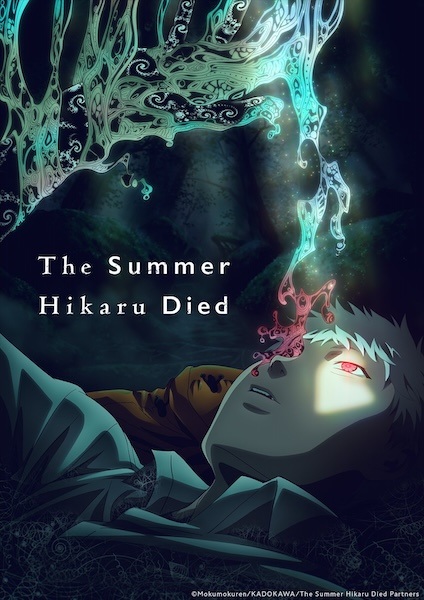
Every year, a show comes along that should absolutely be my jam but leaves me a little cold. 2025's unfortunate honor goes to The Summer Hikaru Died, a critically well-regarded horror story about a young man in rural Japan who realizes a monster has been impersonating his best friend for the past six months. Stuffed to the gills with sinister folklore and homoerotic tension, Hikaru is a rare and important thing in the anime scene, a genuine work of horror exploring grief, longing, and growing up queer in a small town. Perhaps with a more propulsive narrative or characters who felt a little more three dimensional, it might be topping my own list. But while Hikaru wound up being a show I appreciated more than I enjoyed, there's no doubt that it's an ambitious, high-quality story that deserves to be talked about alongside the year's best.
11. Umamusume: Cinderella Gray

2026 may be the year of the horse, but 2025 was the year of the horse girl. Coinciding with the megahit mobile game Umamusume: Pretty Derby launching outside of Japan, we were also treated to Cinderella Gray, an anime adaptation of one of the game's most popular arcs. To call Umamusume unique would be underselling it—its characters are anime girls based on real-life racehorses, and Cinderella Gray puts the Uma spin on the rags-to-riches story of Oguri Cap, a thoroughbred who started life in small-town Japan but quickly rose to national contention. (Don't look up Oguri unless you want this show spoiled.) This was my first exposure to the Umamusume franchise, and while it seems like Cinderella Gray's production values don't match the highs of previous TV entries, its characters are lovable and its narrative is propulsive, with races that routinely left my heart racing. It may take time to get used to a show where horse girls run track and put on idol performances, but like any good racehorse, this is a show that will give you a return on your investment.
10. mono

From the creator of slice-of-life juggernaut Laid Back Camp comes mono, a show that doesn't seem to know what it is and doesn't particularly care. Ostensibly about a group of schoolgirls getting into videography, mono moves at the pace of an easily distractible friend and takes frequent detours into food tourism, Japanese sightseeing, manga creation, and even skateboarding. That slapdash approach would be an issue if the show weren't so confident—the food here looks more delicious than what we see in actual foodie shows (sorry, Food for the Soul), the vicarious tourism is interesting, and the many diversions let the show's talented staff flex their animation muscles in surprising ways. But it's the great, goofy humor that sells this as a full package, since no matter what the cast is doing, there's never a shortage of silly reaction faces, temperamental cats, lazy adults, and the occasional visit by the occult. mono may not click with everyone, but if it does, you'll find one of the most enjoyable sleeper hits of the year.
9. The Fragrant Flower Blooms With Dignity
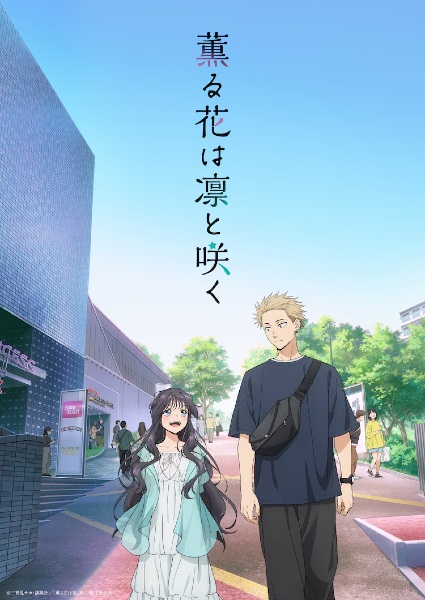
An informal trend I've noticed in recent years is what I'd call the Sincerity Romance—shows that avoid formulaic misunderstandings and love triangles, and instead focus on well-meaning characters coming to a deeper understanding of each other. The Fragrant Flower Blooms With Dignity could be the poster child for this. We follow the reserved student Rintaro, often judged due to his intimidating looks and attendance of a rough school, as his life changes after a run-in with private-school girl Kaoruko. As you might expect from a romance like this, there are adorable blushes and whispered secrets abound, bolstered by a strong aesthetic and detailed character designs. Where Fragrant Flower surprises is not just in its avoidance of the genre's most noxious tropes, but also in its strong sense of class consciousness, focusing on how socioeconomic difference affects its protagonists' self esteem, the assumptions they make about others, and the walls they have to push through to achieve. This is a show about how first impressions aren't the full story, and true to form, it eventually had me rooting for every named character. An absurdly easy recommendation for romance fans.
8. See You Tomorrow at the Food Court
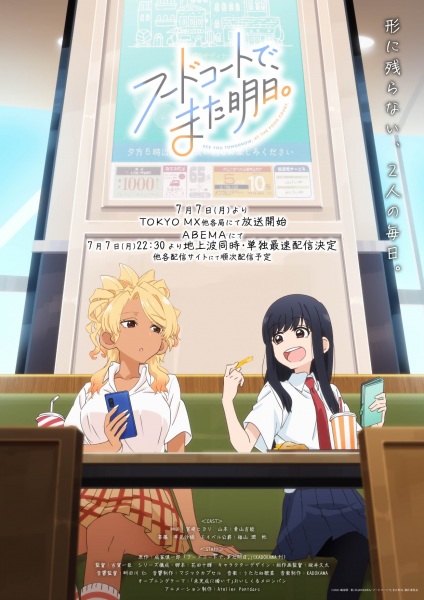
See You Tomorrow at the Food Court is a scrappy little production about two high school girls chatting during their lunch breaks. Turns out you don't need any more than that if you write good dialogue, of which Food Court has an abundance. The nerdy, energetic gremlin Wada and taciturn gyaru Yamamoto make for an immediately perfect comedy duo—but more importantly, they talk and act like actual teenagers. Conversations flit from subject to low-key subject as the girls vent about school, badmouth classmates, talk about crushes on mobile game characters, and generally poke fun at each other. Even though it has a scant six episodes to work with, the show does a tremendous job of selling their friendship, and even gives them a light emotional journey that winds up more satisfying than many full-length shows. Just like the product-placement-filled lunches they frequently eat, Food Court goes down easy.
7. Dan Da Dan Season 2

Speaking of teenagers: Dan Da Dan's back! One of 2024's biggest breakout hits, this second season is just as compelling as the first, with its lovable main duo Momo and Okarun growing closer as they fight off even more dangerous aliens and spirits. Everything that made the first season work is here again in spades: the plotting is outlandish, the action is stylish, the main duo is adorable, and the side characters regularly steal the show with great quips and moments of raw emotion. A slight degradation of the show's production (the poor overworked staff at Science Saru are doing their best) and some more obvious pacing issues keep this season from always executing at its highest potential, but Dan Da Dan remains the freshest and most exciting shounen of recent years, and I can hardly wait until it's back.
6. Mobile Suit Gundam: GQuuuuuuX
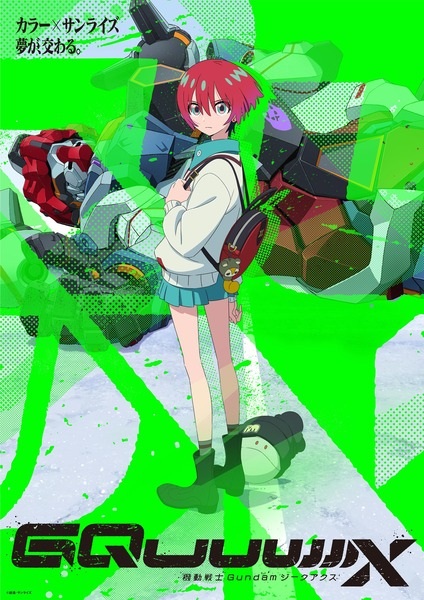
No anime on this list has quite the pedigree of the bizarrely named Mobile Suit Gundam: GQuuuuuuX. Co-produced by studios Sunrise and Khara, directed by FLCL's Kazuya Tsurumaki, scripted by Revolutionary Girl Utena's Youji Enokido, and featuring a backstory episode from Evangelion's Hideaki Anno, GQuuuuuuX's staff is a freakish conglomeration of anime royalty who have made some of the the medium's best sci-fi. The talented staff puts their powers to full use on GQuuuuuuX, filling it with some of the year's most purposeful storyboarding and vivid color design—all while paying homage to the established tone of the Gundam series. As for the story itself, this time we're in an alternate universe where disaffected high schoolers take part in illegal Mobile Suit battles on a post-war space colony. If only the busy scripts had focused a little more on the main characters' emotional journeys and a little less on fanservice for Gundam nerds, this might've wound up one of the all-time great mecha shows. As it is, though, GQuuuuuuX is a vivacious and thrilling ride that feels like a fresh step forward for a long-lived series.
5. Call of the Night Season 2
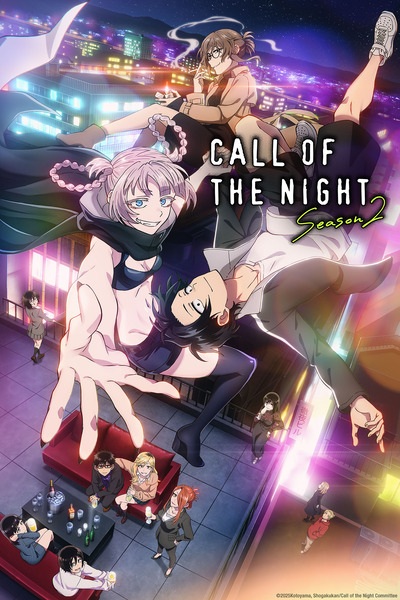
One of 2022's most problematic faves remained just as good, and just as problematic, in 2025. Call of the Night is about Ko, a possibly aromantic 14-year-old boy who wants to become a vampire, and Nazuna, the immortal vamp who can only turn him by making him fall in love with her. If you can get past that thorny premise, you'll strangely find one of anime's most textured and believable romances—both central characters are immature weirdos earnestly trying to do right by each other, and much of this season's best material is about how falling in love actually means putting in the work to form lasting connections through mutual honesty and respect. This season's smart narrative also gives it an excuse to plumb the depths of its broader cast's backstories, the best of which belongs to Anko, a messy vampire-hunting detective whose adulthood struggles and traumatic past make her one of the most intriguing characters of the year. Call of the Night's age gap romance may not track to reality in any way, but the show's lessons are some of the healthiest and most empathetic in anime.
4. Sanda
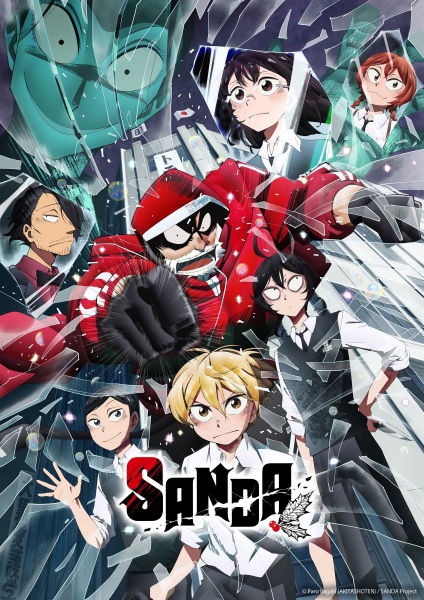
Look alive, motherfuckers—there's a goth Santa Claus anime now, and it rips. Sanda is nominally an action show about a 14-year-old boy whose lineage allows him to transform into Santa Claus, but that battle-shounen premise only scratches the surface. Paru Itagaki originally penned this story, and if you've experienced her previous hit Beastars, you might have an idea how outlandish and messy this show gets. Sanda transforms Paru's penchant for bizarre horniness into a strength, with berserk plot developments and unhinged worldbuilding all feeding into the story's thematic center—puberty. The show is brazen and refreshingly direct about what it portrays, whether that's contrasting the protagonist's fatherly Santa Claus instincts with his desire to kiss his classmates, or standout character Fuyumura questioning her own androgyny and sexual orientation. Studio Science Saru has no intentions of tamping down anything that made the manga unique, translating Paru's anime-meets-Tim-Burton character designs and bull-in-a-china-shop pacing into an arresting, violent production that never lets up. It's true that the show loses some focus and impact as it goes, a side effect of its tendency to present the most extreme possible plot developments at every turn. But any flaws I found here just make Sanda feel even more like a work of mad genius, and I don't think I'd want it any other way.
3. Takopi's Original Sin

Hoo boy. 2025 had a notable number of grimdark fantasy shows, but the nastiest of all was Takopi's Original Sin. The titular Takopi is an adorable alien who comes to Earth to spread joy to children, but winds up meeting Shizuka, a deeply depressed fourth-grader dealing with bullying at school and neglect at home. To say this show portrays a rough childhood would be false advertising—each episode starts with a crisis hotline warning, and Original Sin's unflinching depictions of violence against children's bodies can sometimes feel exploitative, as if the show relishes rubbing your face in it. Yet throughout its frequent narrative twists, raw yet detailed animation, and surprising black comedy, the show achieves a nuance and perspective that rises above its own base instincts. This is a show about children suffering in a world of adults who can't conceive of their pains, how the best intentions of their would-be saviors aren't enough to solve problems of societal failure, and how the impact of such a childhood might make monsters of us all. As long as you have the stomach for it, Takopi's Original Sin is one of the most impactful and essential productions of the year.
2. Apocalypse Hotel

In a year of great adaptations, it was nice to have a reminder of the heights original works can achieve. Apocalypse Hotel, the first directorial work by Kana Shundou, follows a robot hotelier named Yachiyo as she rigorously follows her programming to keep a hotel running decades after humanity fled Earth to escape a supervirus. Despite a premise that might give you flashbacks to 2020, Apocalypse Hotel is mainly a comedy, and a very good one at that—as time passes, the hotel takes on interstellar guests and tanuki staffers, and Yachiyo and her cadre of goofy side characters distill alcohol, build rockets, get into the occasional throw-down, and scream about poop building up in the hallways.
Apocalypse Hotel would be a great time if it were only that, but what makes it one of the most outstanding shows of the year is its core of existential sadness. The inevitability of time—of robots breaking down one by one with no parts to repair them, of loved ones growing up or getting frail, of centuries passing with no contact from humanity—is central to Apocalypse Hotel's narrative, always looming in the background of its high-concept shenanigans. When the show brings that core to the forefront and reflects on what it means to have a purpose in a world that's always moving on, it is affecting, contemplative, and mournful. The show's most notable episode is practically a silent film following Yachiyo wandering city streets reclaimed by nature, for the first time connecting with the planet around her, the possibility of her own ending, and her place in the great cycle of life and death.
That the show puts this stuff next to testicle jokes isn't just a side effect—it's the whole damn point. Apocalypse Hotel is a story about growth in face of loss, about finding meaning in the embrace of chaos and community. 2025 was a year defined for me by the feeling of nightmares coming true, by questions about how we might make it through. In Apocalypse Hotel, I sometimes found answers.
1. CITY The Animation
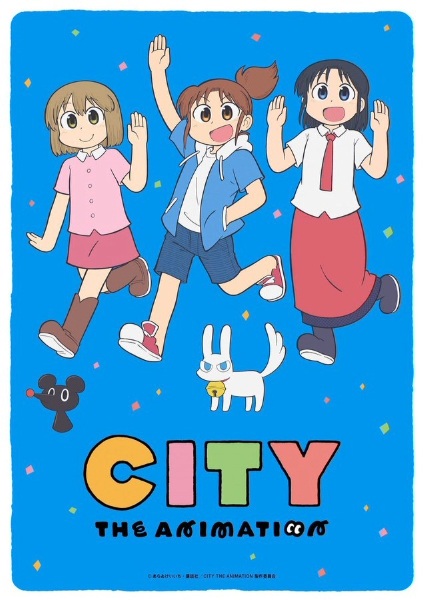
CITY The Animation is a miracle.
In 2011, studio Kyoto Animation adapted Keichi Awara's gag manga Nichijou - My Ordinary Life into one of the funniest, most heartwarming animated comedies to ever exist. The show's DVD sales failed to impress, and Awara continued on to new manga, while KyoAni largely produced synergistic adaptations of manga and light novel properties they owned. There was no reason to expect a second collaboration. Yet in 2025, somehow, KyoAni and Awara returned with an adaptation of his ambitious manga CITY.
CITY The Animation feels like a natural continuation and evolution of Nichijou, an assortment of loosely connected comedy vignettes that take place in a metropolis populated by dozens of recurring characters. Many of its gags start with gentle humor that spins out of control into bubbly surrealism—What if a character gets hit with a soccer ball, kindly accepts the team's apology, and then gets beaned in the face five more times? What if a quest for buried treasure leads to digging up a demon skull and reflexively hurling it into space? Yet despite the Looney Tunes of it all, the show also possesses the ability to pull frank emotion out of the ether, with occasional moments of quiet, heart-melting sincerity standing alongside its zaniest setpieces.
With CITY, KyoAni worked hard to outdo the aesthetic greatness of Nichijou, and the result is a cartoon unlike anything else. Characters are drawn with the same flat colors and pen-stroked outlines as their environments, creating a cohesion between foreground and background that looks like a manga come to life. Gags are elevated with ridiculous ingenuity, featuring spinning cameras, amazing smears, and snappy cuts of animation—all delivered with KyoAni's trademark polish. In one of the most remarkable anime episodes ever made, a story arc culminates in a multi-minute series of shifting panel-in-panel vignettes that follows practically every named character onscreen, an intense labor of love that no sane studio would ever attempt. Yet while CITY's biggest peaks are jaw-dropping, just about every episode features highlights that would be the centerpiece of any other show. KyoAni and Arawa simply threw everything they had at this production, and we were given five shows' worth of heart and passion.
In a year when companies pushed generative AI harder than ever, real creative achievements felt all the more special. CITY The Animation is sometimes unassuming, but the heights it routinely reaches are so dazzling, it boggles my mind to think they were made by human hands. It is among the pinnacle of what can be achieved in TV animation, and it is my favorite show of 2025.


Comments
Post a Comment